March 13, 2026

Reducing Context Switching: Where Teams Lose Time and How to Fix It
Task Management

Context switching is one of the most persistent yet underappreciated barriers to team productivity in today’s work environments. Research indicates that context switching can consume up to 40% of a person's productive time (speakwiseapp.com). For many startups and small teams, the problem is even more acute: the average digital worker toggles between apps and websites nearly 1,200 times per day, leading to substantial productivity losses (speakwiseapp.com).
For growing teams, these constant shifts in focus can mean missed deadlines, more errors, and a sense of chaos. Lost productivity due to constant task switching costs the U.S. economy approximately $450 billion annually. That’s why startups seeking a calmer, more focused alternative to juggling chat threads, scattered docs, and endless notifications are increasingly turning to unified solutions like task management and team communication workspace.
In plain terms, context switching is the mental reset that happens every time you move between tasks, tools, or conversations and have to reorient before you can make progress.
TL;DR:
- Startup teams lose focus fastest when ownership, next steps, and task context aren’t visible in one place.
- A few principles (clear owners, searchable history, linked conversations) reduce “attention residue” and rework.
- A simple task-first workflow keeps discussion attached to work and makes priorities easier to review.
- Most teams improve faster by fixing one recurring mistake (like unclear task statuses) before changing everything at once.
This is for startup founders and small teams who feel like work is split between chat, docs, and task lists. It’s a strong fit when priorities change quickly and you need more focus without adding heavy process.
Why Context Switching Becomes a Real Problem for Startup Teams
It’s a scenario every startup team knows too well: between urgent chat pings, fragmented tools, and shifting priorities, everyone is pulled in multiple directions at once. Studies have observed that developers, for example, switch tasks on average 13 times per hour, spending just about 6 minutes on a task before jumping to another (dlib.hust.edu.vn).
The true cost isn’t just lost minutes—it's increased errors, missed information, and mounting frustration.
Given that only 2.5% of people can multitask effectively, most teams are hit even harder by constant task shifting.
When teams are constantly interrupted or forced to hop between platforms, they lose the deep focus needed for rapid progress. Over time, this leads to longer release cycles, more bugs, and a general feeling that important work is slipping through the cracks.
Many teams don’t realize just how much time is lost to these micro-distractions until they start measuring it.
The Principles That Make Context Switching Easier to Manage
Ever wonder why some teams seem to move faster and with less chaos? It’s not because they work harder—it’s because they’ve adopted a handful of clear principles that reduce confusion and friction.
Here’s how high-performing teams keep context switching in check:
- Visible ownership: When every task has a clearly named owner, there’s less ambiguity and fewer dropped balls.
- Clear next steps: Defined actions for each task reduce the mental load of deciding what to do next.
- Searchable history: Keeping conversations, decisions, and files in one place ensures critical context is never lost.
- Linked conversations: Tying chats and comments directly to tasks means less time spent hunting for information.
- Simple status signals: Quick, visual cues let everyone know what’s moving forward and what’s stuck.
These principles help minimize attention residue, the lingering cognitive effect of switching tasks that can eat up to 40% of productive time. Research shows that only 2.5% of people can multitask effectively, underscoring the importance of deep work, ownership, and focused attention for most teams (speakwiseapp.com).
Structured communication protocols further reduce unnecessary interruptions and increase the quality of collaboration.
The bottom line:
A few simple principles, consistently applied, can transform how teams work—reducing stress and boosting results.
Quick Signs Context Switching Is Slowing Your Team Down
Context switching often shows up as “busy days” that don’t add up to much progress. If your team recognizes any of the patterns below, it’s usually a signal that work and communication aren’t staying connected.
- People regularly redo work or ask the same questions because the latest context is hard to find.
- Tasks move forward in chat, but the task list doesn’t reflect the real status.
- Decisions live in scattered threads, and teams lose time hunting for the “source of truth.”
- Small interruptions stack up and turn focused work into constant restarting.
A Simple Workflow for Handling Context Switching in One Workspace
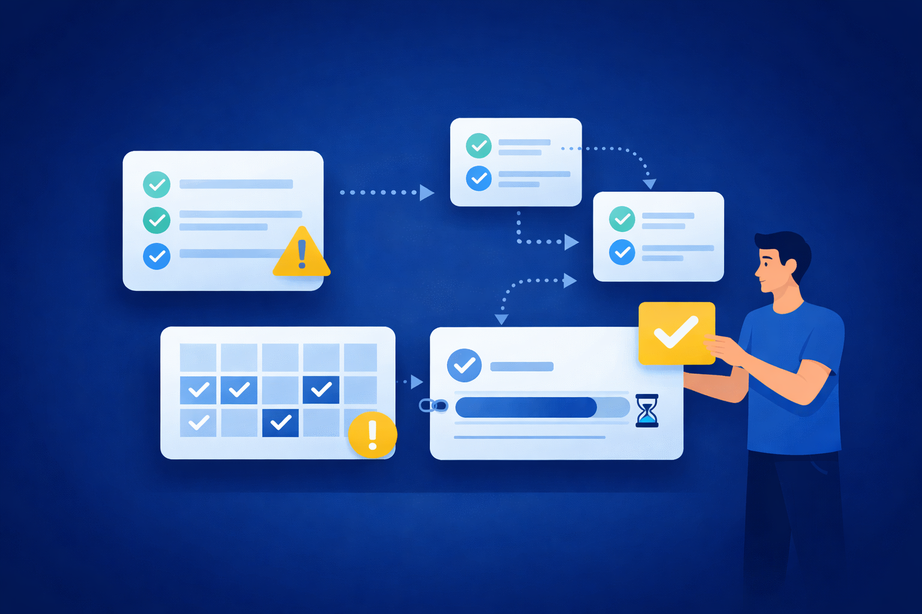
When teams are ready to make a change, the answer isn’t a massive process overhaul—it’s about adopting the right workflow in a single, unified space. Here’s how it can look in action:
- Open tasks in a shared workspace: Make every piece of work visible to the whole team, with clear owners and deadlines.
- Capture context right away: Add key details, files, or decisions directly to each task so nothing gets lost.
- Keep comments and discussions attached to tasks: Instead of jumping between chat threads and docs, keep all conversation in one place. Asynchronous communication is especially valuable for distributed or remote teams.
- Review priorities together: Set aside regular, focused time to check on progress, spot blockers, and reset priorities as needed. Organizations that establish meeting-free days have seen significant improvements in productivity and employee satisfaction.
- Spot and address blockers quickly: Use simple status cues to highlight stuck tasks so they get attention fast.
Teams that implement protected focus time—like "no-meeting" blocks or designated focus days—have seen 35% increases in story completion rates, 28% fewer bugs, and a 45% improvement in team satisfaction scores (cannelevate.com.au).
Pro tip: When managing real-time updates, Notification Hygiene: How to Use Real Time Updates Without Constant Interruptions offers practical strategies for reducing distraction and keeping the team focused.
Bottom line:
A streamlined workflow in one workspace reduces friction, keeps everyone on the same page, and helps teams deliver faster with less stress.
Common Mistakes Teams Make with Context Switching
It’s a question nearly every team faces: Why do context switching problems keep coming back, even after trying new tools or processes?
The real answer is that common traps—like unclear owners, too many open tasks, scattered follow-ups, and status updates that don’t reflect real work—tend to persist unless addressed directly. After just 20 minutes of repeated interruptions, people report much higher stress, frustration, and a heavier perceived workload (cannelevate.com.au).
Studies have found that self-initiated task switches can be even more disruptive than external interruptions.
What really matters is identifying one mistake that’s slowing your team down—such as unclear task statuses—and fixing that first.
If action items tend to disappear inside chat threads, see How to Stop Losing Action Items in Chat Threads.
For more on improving coordination, see Task Statuses That Work: A Simple System for Fast Teams.
How to Roll This Out Without Adding Friction
Too many teams hesitate to make changes because they fear added complexity. But rolling out better context switching habits doesn’t have to be a heavy lift.
Start with a small kickoff—pick one workflow to pilot and write a short guide that explains the new habits and expectations. After a week or two, review what’s working and where friction remains.
Teams that have implemented these practices have reported up to a 45% improvement in satisfaction and a 28% reduction in bugs (cannelevate.com.au). Leveraging Agile frameworks and capacity planning can further support smooth adoption of new workflows by keeping workloads manageable.
Key takeaway:
Small, incremental changes—tested and refined in the real world—are the fastest way to reduce context switching and boost team productivity. Try piloting this approach with one active team workflow in Fluorine and build from there.
Frequently Asked Questions
What is context switching in a work setting?
A: It’s the productivity drag that happens when you bounce between tasks, tools, or conversations and need time to reload the details each time you return.
Why does context switching hit startup teams especially hard?
A: Startups and small teams tend to run on fast-changing priorities and lots of chat-driven coordination, so it’s easy for attention to fragment. Over time, that fragmentation shows up as missed details, more errors, and lower team productivity.
What’s a practical way to reduce context switching without adding more meetings?
A: Keep work visible with clear owners, capture context directly on tasks, and tie discussion to the work so updates don’t get lost in separate threads. This kind of task management plus linked communication also makes it easier to use async updates and protect focused time.
What should we capture on a task so the team doesn’t lose context?
A: The basics: the goal, the next step, key decision notes, and any files or links people will need to move forward. The point is to keep the “why” and the “latest state” attached to the task, not scattered across tools.
How do we roll this out without disrupting the team?
A: Pilot one workflow (like a single project or recurring process), write a short guide for the new habits, and check in after a week or two to see what’s working. The article’s approach is intentionally incremental so you can adjust based on real friction.
References
- Cannelevate. (2024). The hidden cost of context switching: Productivity in the modern workplace. https://www.cannelevate.com.au/article/context-switching-productivity-hidden-cost-modern-work/
- Speakwise. (2024). Context switching statistics. https://speakwiseapp.com/blog/context-switching-statistics/
- Dlib.hust.edu.vn. (2021). Task switching in developer teams. https://dlib.hust.edu.vn/bitstream/HUST/24323/1/OER000003147.pdf
- Aproove. (2025). Project management best practices. https://www.aproove.com/blog/project-management-best-practices-streamlining-workflows-in-2025
- Blog.logrocket.com. (2024). Product management: Context switching. https://blog.logrocket.com/product-management/context-switching/